
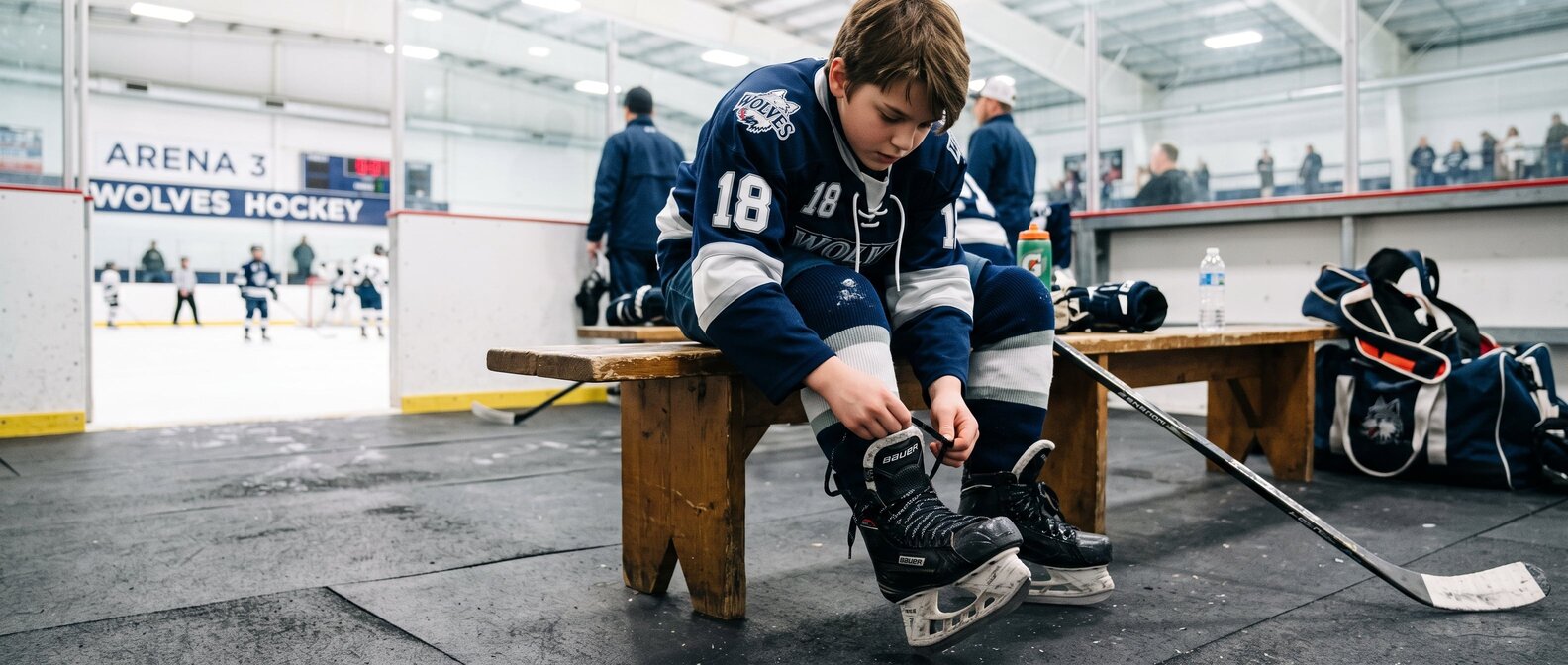
Why Hockey Skates Can Cause Foot Discomfort
Hockey skates are stiff, closely fitted boots designed to transfer a player's movements to the ice. That rigidity is useful for performance but also means the foot is held firmly in place for long periods. For a child whose feet are still growing, an ill-fitting or overly tight skate can become a source of discomfort.
Unlike running shoes, skates do not flex much, and pressure points can develop where the boot presses against the foot or ankle. Long practices, cold temperatures, and repeated lacing all add to the demands placed on a young player's feet.
This article is educational and does not replace an individual assessment. Our broader parent's guide to children's sports foot care offers additional background for active children.
How Skate Fit Affects Growing Feet
Skate fit is central to comfort. Children's feet can change size within a single season, so a skate that fit well a few months ago may now be too small, or a hand-me-down skate may never have matched the child's foot shape.
Some general points many hockey parents find helpful:
- Check skate fit regularly through the season as feet grow
- Look for a snug but not painful fit, with the heel seated firmly in the boot
- Avoid buying skates a full size or more too large in the hope of getting extra seasons, as excess room can create movement and pressure
- Pay attention to lacing so the skate is secure without being over-tightened across the ankle
Proper fit does not resolve every concern, but it is often the most important starting point for skate-related discomfort.
General Steps That May Ease Skate Discomfort
When a young player reports skate-related foot discomfort, a few general steps may help:
- Reassess fit: Confirm the skate still matches the child's current foot size and shape.
- Adjust lacing: Easing tension across the front of the ankle can reduce lace bite for some players.
- Protect pressure points: Padding at a specific rub point may relieve localised irritation.
- Allow recovery: Time out of the skates between sessions gives the feet a rest.
- Care for skin and nails: Keeping toenails trimmed straight across and attending to blisters supports comfort.
If discomfort continues despite attention to fit, a professional assessment can help identify what else may be contributing.
Warning Signs Worth Watching For
Some foot fatigue after a long practice is common. The following may suggest an assessment is worthwhile:
- Pain that continues off the ice or between sessions
- Persistent redness, swelling, or a painful pressure area
- A toenail that becomes red, sore, or inflamed
- A limp or a change in how your child walks after skating
- Discomfort that returns each time despite adjusting the skate
These are general signals rather than a diagnosis. Ongoing or focused pain is worth discussing with a healthcare professional.
When to Consider a Chiropody Assessment
If your child has ongoing foot pain related to skating, a persistent pressure point, or a nail concern that is not settling, a professional assessment can be worthwhile. A chiropodist is a regulated foot care professional in Ontario, registered with the College of Chiropodists of Ontario, who can assess the feet and discuss appropriate options.
At Foot Forward Clinic, our registered chiropodists provide pediatric foot assessments for hockey families across Maple, Woodbridge, and the wider Vaughan area. You can contact our clinic or book an assessment online.
Educational information only. This article is intended for general education and should not replace an assessment by a qualified healthcare professional. If you have concerns about your child's feet, please book an assessment with a registered chiropodist.