
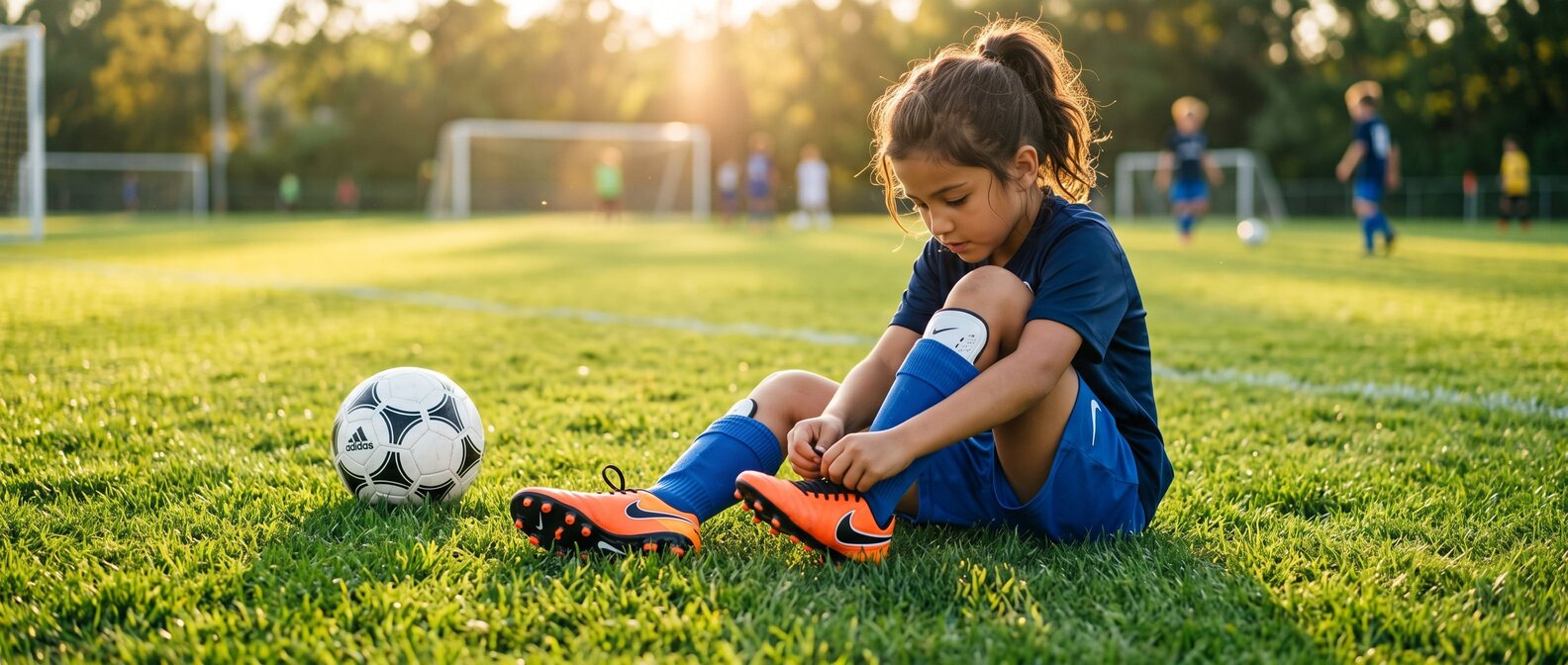
Why Soccer Cleats Deserve Extra Attention
Soccer cleats are designed to grip the pitch, which means they fit more closely and have less cushioning than everyday trainers. Studs concentrate pressure in specific areas, and the snug fit that helps with ball control can also crowd the toes if the cleat is the wrong size or shape.
For children, whose feet grow quickly and are still developing, cleat choice matters. A well-chosen cleat supports comfortable play, while a poorly fitting one can contribute to blisters, toe discomfort, and nail concerns over a season.
This article offers general, educational guidance rather than a specific recommendation for any child. For broader background, see our parent's guide to children's sports foot care.
Getting the Fit Right
Fit is the most important factor when choosing cleats for growing feet. Some general points many parents find helpful:
- Measure both feet: Feet can differ slightly; fit to the larger foot.
- Allow a small amount of room: Aim for roughly a thumb's width between the longest toe and the end of the cleat, so toes are not crowded.
- Fit at the end of the day: Feet tend to be at their largest later in the day.
- Fit with soccer socks: Try cleats on with the socks your child will actually wear to play.
- Check width, not just length: A cleat can be the right length but too narrow, which can pinch the forefoot.
Resist the temptation to buy cleats several sizes too large to stretch out a season. Excess room reduces control and can create movement that leads to blisters.
Stud Type and Playing Surface
Cleats come with different stud configurations suited to different surfaces, firm ground, artificial turf, or indoor courts. Using a cleat matched to the surface your child plays on can improve grip and comfort.
Studs concentrate pressure under the foot, so a cleat intended for the wrong surface may feel uncomfortable or provide poor traction. Many young players use more than one surface across a season, and footwear appropriate to each is a sensible consideration.
If your child regularly reports discomfort under the ball of the foot after playing, the stud pattern and surface match are among the general factors worth reviewing, alongside overall fit.
Replacing Cleats and Checking Fit Over Time
Because children's feet grow quickly, cleats that fit at the start of a season may become tight before it ends. Checking fit periodically helps avoid the toe crowding that can contribute to blisters and nail concerns such as ingrown toenails.
General habits that help:
- Re-check fit every couple of months during a growth spurt
- Look for signs the cleat is too small, such as red marks, complaints of pinching, or the child curling their toes
- Replace cleats when studs are worn or the upper has broken down
- Keep toenails trimmed straight across to reduce nail irritation in a close-fitting boot
Appropriate footwear cannot prevent every concern, but attention to fit over time is one of the more useful things a parent can do.
Do Growing Feet Need Orthotics in Cleats?
Parents sometimes ask whether their child needs custom orthotics in their soccer cleats. Not every young player requires them, and the answer depends entirely on the individual child. Orthotics are one option a chiropodist may discuss after an assessment, alongside footwear guidance and other approaches.
We explore this topic more fully in our article on whether a child needs custom orthotics for sports. Any decision should follow an individual assessment rather than a general assumption, and cleats have limited internal room, which is a practical factor a chiropodist can take into account.
When to Consider a Chiropody Assessment
If your child has ongoing foot pain after playing soccer, recurring blisters, or a nail concern that is not settling, a professional assessment can be worthwhile. A chiropodist is a regulated foot care professional in Ontario, registered with the College of Chiropodists of Ontario, who can assess the feet and discuss appropriate options including footwear guidance.
At Foot Forward Clinic, our registered chiropodists provide pediatric foot assessments for soccer families across Maple and the wider Vaughan area. You can contact our clinic or book an assessment online.
Educational information only. This article is intended for general education and should not replace an assessment by a qualified healthcare professional. If you have concerns about your child's feet, please book an assessment with a registered chiropodist.