
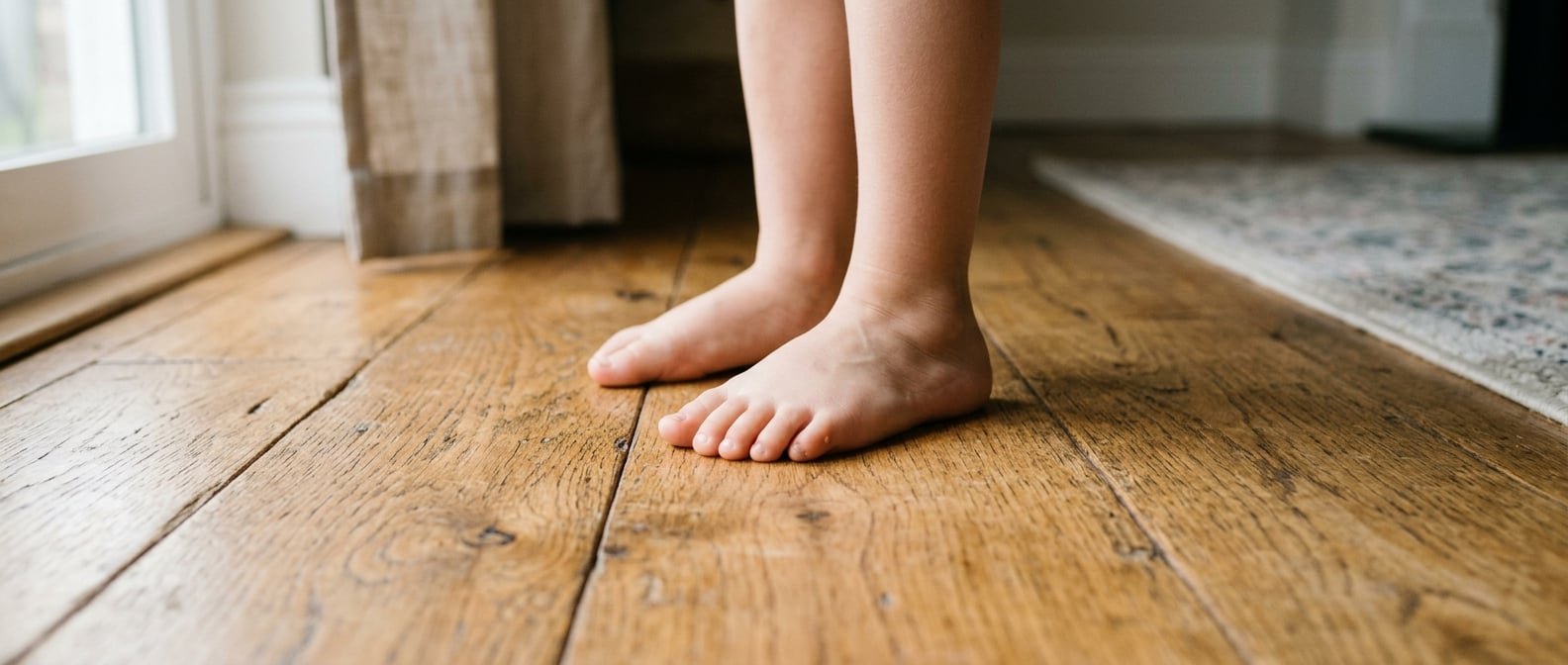
Understanding Flat Feet in Childhood
It is very common for parents to look at their young child’s feet and notice that the arches appear flat. This often raises the question of whether flat feet are a problem that needs fixing. In many cases, flat feet in children are a normal part of development.
Babies and toddlers are typically born with flat feet, and the arch usually develops gradually through childhood as bones, muscles, and ligaments mature. Some children develop a clear arch, while others naturally have a lower arch into their teenage years and adulthood without any difficulty.
This article offers general, educational information to help parents understand flat feet. It is not a substitute for an individual assessment, which is the only way to determine what is appropriate for a specific child.
Flexible Versus Rigid Flat Feet
Healthcare professionals often describe flat feet in two broad ways. Understanding the difference can help parents appreciate why an assessment matters:
- Flexible flat feet: The arch appears when the child is on tiptoe or sitting but flattens when standing. This is the most common pattern in children and is frequently painless.
- Rigid flat feet: The arch remains flat whether the child is standing, sitting, or on tiptoe. This pattern is less common and is one of the reasons a professional may want to take a closer look.
These descriptions are general. A chiropodist can assess which pattern applies to your child and whether it is associated with any symptoms.
When Flat Feet Are Usually Not a Concern
In many children, flat feet cause no pain and do not interfere with walking, running, or playing sport. When a child has flexible flat feet, no discomfort, and is meeting their usual physical milestones, it is often simply part of how their feet are developing.
In these situations, watchful observation is commonly all that is suggested. Parents can keep an eye on comfort levels and activity, and mention flat feet at routine health visits. The presence of a low arch alone, without symptoms, does not automatically require treatment.
Signs That May Warrant a Closer Look
While flat feet are often harmless, certain signs may suggest it is worth arranging an assessment. General signs parents sometimes notice include:
- Foot, ankle, or leg pain that your child links to activity
- Tiring easily or avoiding physical activity they used to enjoy
- Uneven or unusual wear on the soles of their shoes
- A foot that appears to roll inward noticeably when walking
- Flat feet that seem to only affect one side
- Stiffness in the foot, or an arch that never appears on tiptoe
These signs do not diagnose any particular condition. They are shared to help parents decide when a professional opinion may be useful. Our guide on flat feet offers further general background.
How a Chiropodist Assesses Flat Feet
During a foot assessment, a chiropodist typically looks at how a child stands and walks, checks the flexibility of the foot, and considers whether flat feet are linked to any symptoms. They will also take into account the child’s age and stage of development, since a low arch is expected in younger children.
If any approach is discussed, it is tailored to the individual child. Options a chiropodist might consider include footwear guidance, activity advice, or in some cases custom orthotics. Importantly, orthotics are not automatically needed for flat feet, and many children with flat feet require no intervention at all. Our article on whether children need orthotics for sport explores this question further.
When to Consider an Assessment
If your child has foot or leg pain, tires easily during activity, or you have noticed any of the signs above, arranging a professional assessment can provide clarity and peace of mind. A chiropodist is a regulated foot care professional in Ontario who can assess your child’s feet and explain what, if anything, is appropriate.
At Foot Forward Clinic in Maple, our registered chiropodists assess children’s feet in a friendly setting. You can contact our clinic or book a pediatric foot assessment online. For a broader overview, see our parent’s guide to children’s sports foot care.
Educational information only. This article is intended for general education and should not replace an assessment by a qualified healthcare professional. If you have concerns about your child's feet, please book an assessment with a registered chiropodist.