
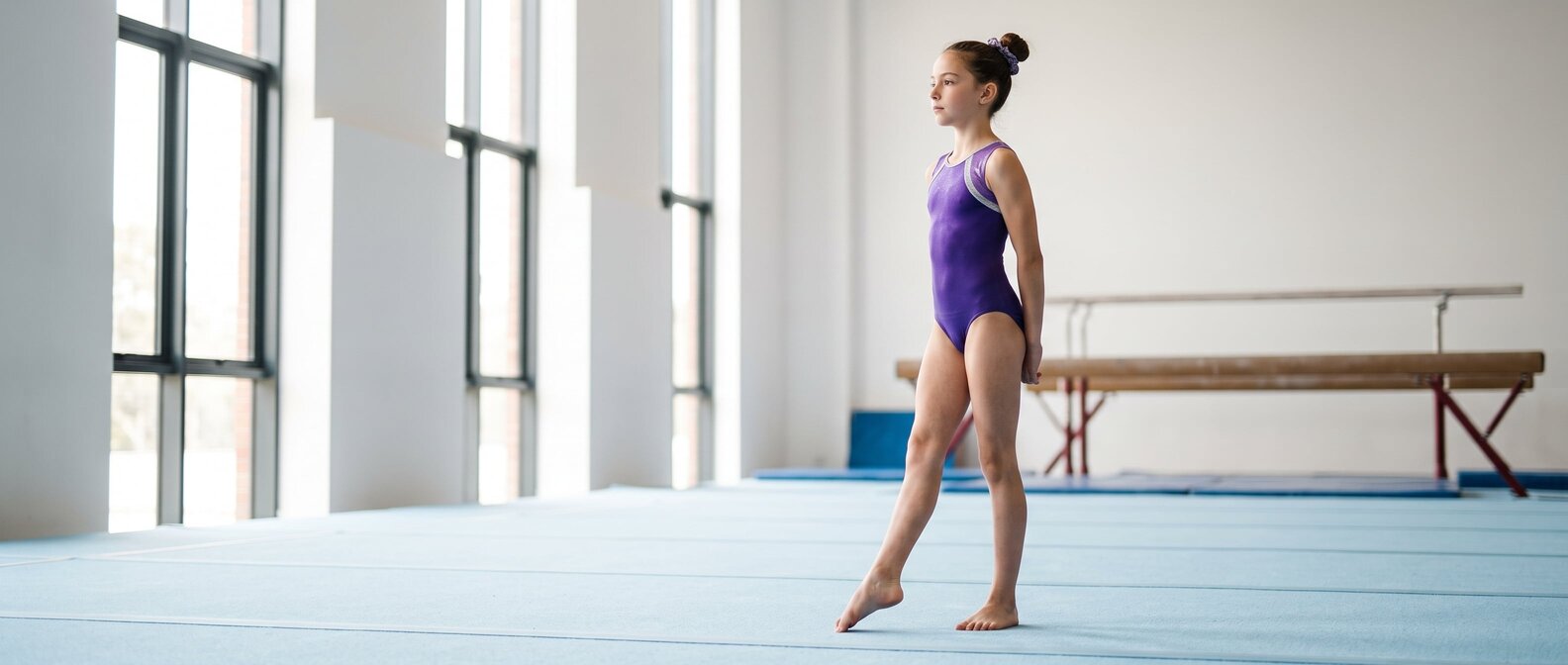
Why Gymnastics Is Demanding on the Feet
Gymnastics asks a great deal of the feet. Athletes spend time barefoot, land repeatedly from height, balance on the toes and balls of the feet, and point and flex through a wide range of motion. For a young gymnast whose feet are still developing, this combination places distinctive demands on the heels, arches, toes, and ankles.
Most young gymnasts train and compete without lasting foot problems. When discomfort does appear, it is often related to the repetitive nature of the sport rather than a single dramatic event. Understanding the general concerns that can arise helps parents notice when something may need a closer look.
This article is educational and does not replace an individual assessment. For a broader starting point, our parent's guide to children's sports foot care covers foundational information for active children.
Common Foot Concerns in Young Gymnasts
Several foot and heel concerns appear more often in gymnastics because of its specific movements:
- Heel pain: Repeated landings can irritate the growth plate at the back of the heel, a concern discussed in our article on heel pain and Sever's disease.
- Toe and forefoot discomfort: Balancing and pushing off on the toes places load on the forefoot and toe joints.
- Arch aches: Time spent barefoot and pointing the feet can lead to arch fatigue, particularly during growth spurts or increases in training.
- Ankle strains: Landings and dismounts can occasionally result in ankle sprains or strains.
- Skin concerns: Friction from bars, beams, and mats can contribute to blisters and calluses.
The presence of one of these concerns does not automatically indicate a serious problem. A chiropodist can help interpret symptoms in the context of a gymnast's training and stage of growth.
The Role of Barefoot Training and Toe Loading
Unlike many sports, gymnastics is often performed barefoot or in thin slippers, which means the feet absorb impact and provide grip without the cushioning of athletic shoes. Repeatedly pointing the toes, balancing on the balls of the feet, and landing from height are all part of the sport.
This toe and forefoot loading is normal and is part of how gymnasts develop strength and control. When training volume rises quickly, however, the same structures may become fatigued or irritated. Gradual increases in training, adequate rest between demanding sessions, and attention to any recurring discomfort are sensible general habits.
Because barefoot training removes the buffer that footwear normally provides, foot care and early attention to persistent aches can be particularly relevant for gymnasts.
Warning Signs Worth Watching For
Some soreness after a demanding session is common. The following patterns may suggest an assessment is worthwhile:
- Pain that persists for more than a few days or keeps returning
- A change in how your child walks, lands, or takes off
- Swelling, redness, or warmth around the heel, arch, toe, or ankle
- Reluctance to attempt skills they previously enjoyed
- Pain that is worse first thing in the morning or after rest
- Discomfort focused consistently on one area
These are general signals rather than a diagnosis. Many have straightforward explanations, but ongoing or focused pain is worth discussing with a healthcare professional.
Supporting a Young Gymnast’s Foot Health
A few general habits can support the foot health of young gymnasts:
- Build training gradually: Increasing intensity or hours slowly gives developing tissues time to adapt.
- Prioritise rest and recovery: Rest days and variety help reduce repetitive strain.
- Warm up and cool down: Preparation and gentle stretching are widely encouraged.
- Care for the skin: Keeping feet clean and dry and attending to blisters early supports healthy skin.
- Encourage communication: Let your child know it is fine to speak up about aches so concerns are noticed early.
These are general wellness suggestions rather than treatment for any specific condition.
When to Consider a Chiropody Assessment
If your young gymnast has ongoing foot or heel pain, a change in how they move, or discomfort affecting their training, a professional assessment can be worthwhile. A chiropodist is a regulated foot care professional in Ontario, registered with the College of Chiropodists of Ontario, who can assess the feet and discuss appropriate options.
At Foot Forward Clinic, our registered chiropodists provide pediatric foot assessments for families across Maple and the wider Vaughan area. You can contact our clinic or book an assessment online to discuss your child's needs.
Educational information only. This article is intended for general education and should not replace an assessment by a qualified healthcare professional. If you have concerns about your child's feet, please book an assessment with a registered chiropodist.