
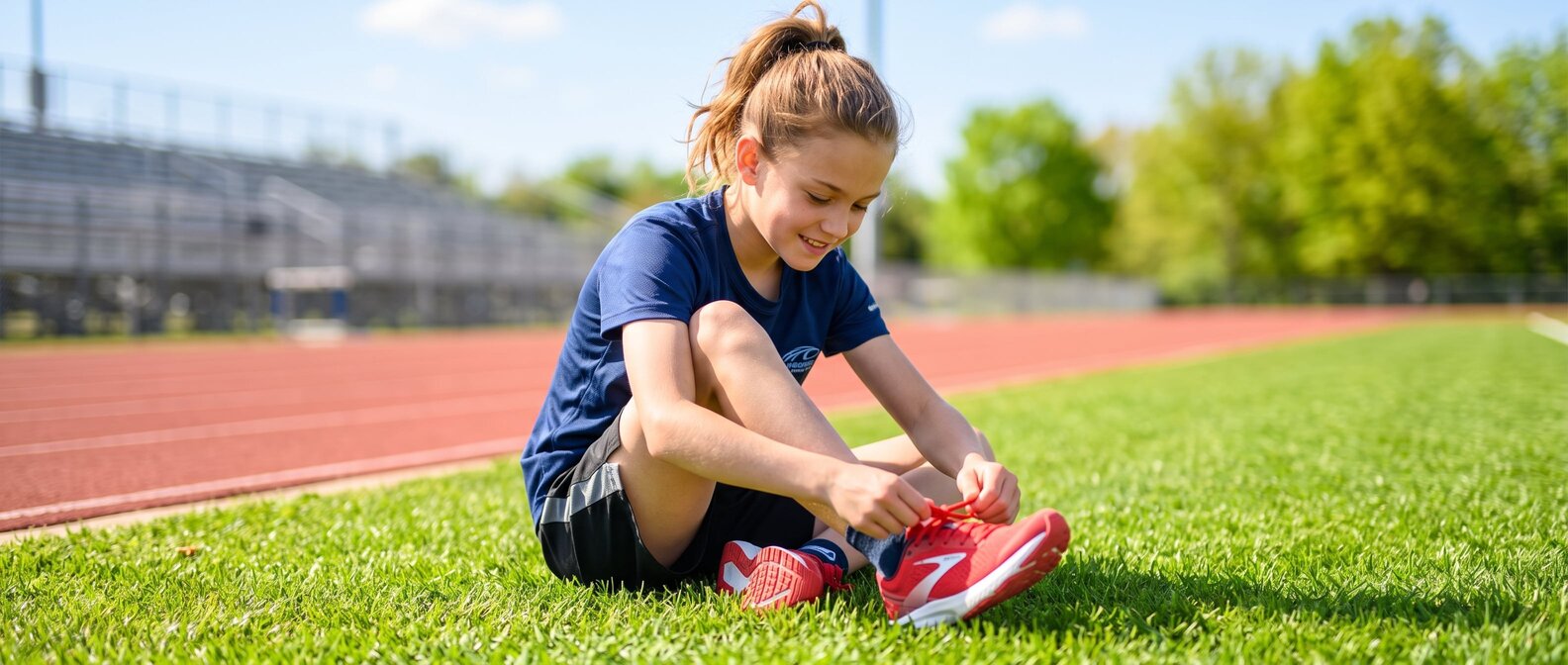
Why Young Athletes Are Prone to Foot Concerns
Children and teenagers who play organised sport place repeated stress on feet that are still developing. Growth plates, areas of soft, growing cartilage near the ends of bones. Do not finish maturing until the teenage years, which means a young athlete's feet respond to activity differently than an adult's.
Running, jumping, and quick changes of direction are part of many youth sports, and this repeated loading is a normal part of being active. For most children it causes no lasting problem. Sometimes, though, the demand outpaces what a particular structure can comfortably handle, and discomfort follows.
This article offers a general, educational overview of the foot and heel concerns seen more often in young athletes. It is not a diagnostic tool and does not replace an individual assessment. Our broader parent's guide to children's sports foot care provides a helpful starting point as well.
Heel Pain From Growth Plate Irritation
One of the more common reasons an active child develops heel pain is irritation of the growth plate at the back of the heel, sometimes called Sever's disease or calcaneal apophysitis. It tends to appear during growth spurts in children who take part in running and jumping sports.
Parents often notice a child limping after activity, walking on their toes, or reporting tenderness when the back of the heel is squeezed. Because this concern is so common in young athletes, we cover it in detail in our article on heel pain after soccer and Sever's disease.
A chiropodist can assess heel pain in the context of a child's age, sport, and growth stage, and discuss general approaches that may be appropriate.
Sprains, Strains, and Overuse
Beyond heel concerns, young athletes may experience a range of soft-tissue and overuse-related complaints, including:
- Ankle sprains: Twisting the ankle during a quick movement or awkward landing is common in field and court sports.
- Arch and midfoot aches: Repetitive loading can lead to discomfort along the arch, particularly in children with very flat or very high arches.
- Overuse-related soreness: Training that increases quickly in intensity or volume can outpace what young tissues have adapted to.
- Toe and forefoot pain: Tight footwear and repeated pushing off can contribute to forefoot discomfort.
Many of these settle with sensible rest and activity adjustment. When pain is persistent, recurring, or changes how a child moves, a professional assessment can help clarify what is going on.
Skin and Nail Concerns From Sport
Not every sports-related foot complaint involves bones or joints. The warm, moist environment inside athletic footwear, combined with friction, can contribute to skin and nail concerns such as:
- Blisters and calluses from repeated rubbing
- Ingrown toenails, which can be aggravated by tight footwear and improper nail trimming
- Athlete's foot and other skin concerns linked to shared sports environments
Good footwear fit and simple hygiene habits go a long way. When a skin or nail concern is painful, recurring, or shows signs of irritation, a chiropodist can assess it and discuss appropriate care.
General Warning Signs for Parents
Occasional soreness after a busy day of sport is common. Certain patterns, however, may suggest an assessment is worthwhile. Parents often find it helpful to watch for:
- Pain that lasts more than a few days or keeps returning
- A limp or a change in how a child walks or runs
- Reluctance to take part in activities they usually enjoy
- Swelling, redness, or warmth around a joint, the heel, or a toe
- Pain that is present first thing in the morning or wakes a child at night
- Discomfort consistently focused on one specific spot
These signs do not diagnose any particular condition, and many have simple explanations. They are offered as a general guide to help you decide when a professional opinion may be useful.
When to Consider a Chiropody Assessment
If your child has ongoing foot or heel pain, a change in how they move, or discomfort that is affecting their enjoyment of sport, arranging a professional assessment can be worthwhile. A chiropodist is a regulated foot care professional in Ontario, registered with the College of Chiropodists of Ontario, who can assess a young athlete's feet and discuss appropriate options such as footwear guidance, activity adjustment, or custom orthotics where relevant.
At Foot Forward Clinic, our registered chiropodists provide pediatric foot assessments in a child-friendly setting for families in Maple, Woodbridge, and the wider Vaughan area. You can contact our clinic or book an assessment online.
Educational information only. This article is intended for general education and should not replace an assessment by a qualified healthcare professional. If you have concerns about your child's feet, please book an assessment with a registered chiropodist.